top of page


Asian Extracts Magazine invites writing on the theme Home for our first issue coming out in October 2020. Issue No. 1 will also feature work already published on the Delhiwallah Poetry Collective.

Theme: Home is about places where we live (whether temporary or permanent) and the way they affect us. It could include an opportunity to explore domestic dramas, generational and cultural divides, class, politics, and psychology. Writers can also explore a whole range of issues concerning Home.

Who Can Submit: Emerging writers from Asia are encouraged to submit. Submissions in all languages (with or without translation) are accepted.

Deadline: September 25, 2020

General Guidelines

Thank you for considering Asian Extracts for the publication of your original creative nonfiction (essays, reviews, photo essays on travel, food, entertainment, culture, history, etc.), fiction (flash fiction, short stories), poetry, or art.

Asian Extracts publishes fiction, creative nonfiction, poetry, and art by writers from Asia.

  • We do not charge for submissions.

  • Submit all your work as a Microsoft Document in Times New Roman 12-point font, double spaced.

  • Submissions in all languages (with or without translation) are accepted.

  • Please be sure to submit work that is previously unpublished or has permission to be republished. Tell us in your cover letter whether your submission is exclusive to us or whether you have submitted to other magazines as well. If another magazine accepts your work for publication, please get in touch with us immediately.

  • There is no limit on the number of submissions made by a submitter. However, please consider the guidelines as mentioned—poetry (up to three poems), fiction (flash fiction, short stories), creative nonfiction (essays, reviews, photo essays on travel, food, entertainment, culture, history, etc.) or art (up to five images).

  • If you are sending work in more than one category, please send your submissions in separate documents.

  • If you are sending more than one poem, please combine all poems in one document and start each poem on a new page. Each poem must have a title.

  • If you are submitting art, please make sure that it includes a title, medium, and date.

  • Please make sure to provide sources wherever necessary in your submissions.

  • We respond to all submissions by email. If your work is selected to be published, we will get back to you within two weeks.

  • Please make sure to save delhiwallahpoetrycollective@gmail.com in your contacts to prevent our response being caught up in your spam folder.

How to Submit Your Work

We accept submissions via email.

Please submit your work to delhiwallahpoetrycollective@gmail.com with a subject line Asian Extracts Submission: [Writer’s Name]. Mark a copy to rxnarang@gmail.com and ratzest@gmail.com.

The body of your email must include the following details:

NAME (As you wish to be credited)

TYPE OF SUBMISSION(S) (Creative Nonfiction, Fiction, Poetry, Art)

TITLE OF SUBMISSION(S)

WORD COUNT

IF THE SUBMISSION IS EXCLUSIVE TO US (If no, please share details)

ANYTHING ELSE YOU WOULD LIKE US TO KNOW

Size Limits

Fiction, Creative Nonfiction: Up to 3000 words

Poetry: Up to three poems

Art: Up to 5 images

For any queries, please write to us at delhiwallahpoetrycollective@gmail.com.


Photo Credit: Mohenjo Daro by Uma Rajasingam

It was breath-taking—the beautiful, waist-high piles of brick and earth, outlining the walls and courtyards of the ancient, uninhabited city. The relentless sun blazed overhead; a brown landscape of hillocks and mounds before me unfolded gently as far as my shielded gaze could discern. As I held my hand up to my forehead, studying this extraordinary sight, no one could tell how my heart pumped or how the adrenaline coursed through my veins. It was exactly as I had imagined. I was in Mohenjo Daro, the city of my dreams. I was finally home.

The year was 1999. I was lucky enough to visit Mohenjo Daro at a time before 9/11; before restrictions on travel would grip the world in a nightmare of bureaucratic red-tape. But why was I in Mohenjo Daro in the first place?

Photo Credit: The Priest King by Mamoon Mengal / CC BY-SA (https://creativecommons.org/licenses/by-sa/1.0)

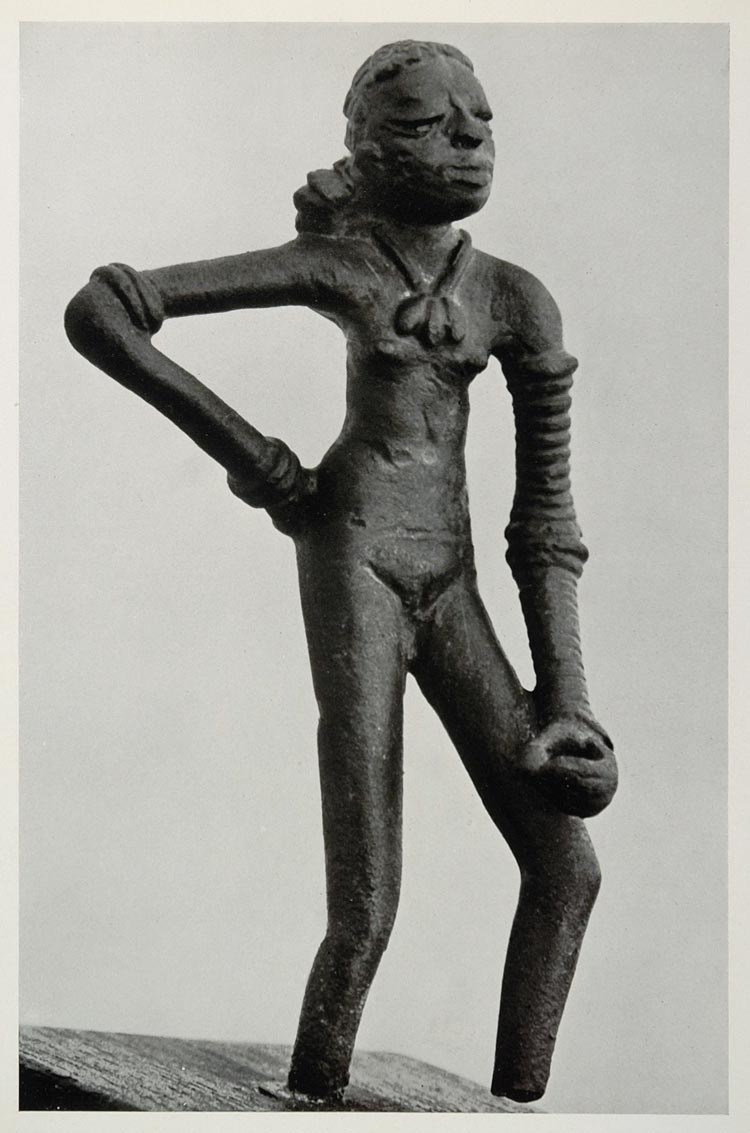
The Indus Valley civilization had captured my imagination even as a teenager when I had first set eyes on those two iconic pictures in my history textbook—that of the priest-king and the dancing girl. As I listened to my teacher describe it as one of the world’s oldest and most mysterious civilizations, my eyes as big as saucers, I was hooked. Mysterious, because archaeologists still could not decipher its script, nor tell how and why this great civilization had ceased to exist.

The Indus Valley continued to colour my imagination until I left school, and my home in Malaysia to further my education. But it was not before I was in my mid-thirties, and already a mother of three, that I had reason to revisit my fascination for the place. Interestingly, it came after a period of intense spiritual questioning, during which I had the idea of writing a novel tracing the roots of my culture. The question I asked myself was, how much could Hinduism have been influenced by that now vanished, but once-glorious civilization?

Photo Credit: The Dancing Girl by Alfred Nawrath / Public Domain

It was only after my novel Disorientation and its characters had taken up permanent residence in my imagination that I actually visited Harappa and its sister city, Mohenjo Daro. I booked a customised package tour with a travel agency in Pakistan. My journey started in Islamabad, from whence I flew to Lahore. I intended to traverse the country from top to bottom, stopping on the way at Harappa and Mohenjo Daro, and several other smaller places like Multan and Sukkur. From Lahore to Karachi I travelled by car, with a wonderful tour guide, who generously pointed out to me the beauty and history associated with the various places we passed. Some part of the way, we even traversed the ancient Silk Road that once ran from China to Europe. We saw beautiful mosques, palaces, gardens, museums, and even a carpet factory, but I admit the trip really began to get interesting for me when we approached one of the archaeological sites.

In Harappa and Mohenjo Daro, no longer having to rely only on my imagination, I witnessed for myself the brilliance of the ancient Harappan town planners and administrators. The way their streets and buildings were aligned in a grid pattern protecting residents from strong winds, and fortifying their acropolis to contain and preserve their important buildings—that was architecture!

Photo Credit: Mound F, Harappa by Uma Rajasingam

Some houses were double-storeyed, with courtyards and staircases and rooftop terraces. All inhabitants enjoyed common conveniences such as bathing tanks and community halls.

Photo Credit: Great Bath, Mohenjo Daro by Uma Rajasingam

The cities had common and private bathing wells, sophisticated drainage, and toilets; in the Mohenjo Daro acropolis, even a complex that might have housed some sort of monastery or a university. An archaeological museum on the Harappa site showcased the jewellery, pots, games, seals, and toys unearthed during various excavations. I marvelled at everything.

After visiting Harappa, and on the way to Mohenjo Daro, we made an overnight stop at Multan. The ancient city is thought to have been a halfway rest stop for traders travelling between Harappa and Mohenjo Daro. Estimated to be over five thousand years old, Multan is also a ‘living city’, a city that has been continuously occupied over the millennia, built and rebuilt by successive generations as its roads and houses fell into disrepair. But historians believe that much treasure of archaeological value may still lie hidden beneath Multan’s upper layers. This city was never abandoned like the others when the Indus Valley Civilization disintegrated, and continued to be occupied by successive rising cultures.

Photo Credit: Modern Bazaar, Multan by Uma Rajasingam

Since it is a living city, no excavations can be carried out in Multan without destroying existing houses and buildings. But the architecture and layout of a city may be just as useful in gauging its history as good, old-fashioned archaeology. To get an idea as to what a typical Indus Valley city would have looked like, my guide took me to the oldest part of Multan—the bazaar. When I saw it, I had to agree, it looked very much like what any marketplace or city centre of the Harappan civilization would have looked like during its mature phase; a large main street lined with buildings, wide enough to accommodate at least two lanes of passing carts or other vehicles, stalls overflowing with merchandise lining the walls, and numerous alleyways leading, in grid-like fashion, off the main street into residential dwelling areas, where people could leave or enter their homes safe from the danger of passing vehicles. Which was the case here, in the bazaar in Multan.

I had the good fortune to look into one of the homes off the main street after my guide obtained permission from a boy who lived there.

I saw a layout that resembled the standard Harappan layout—a few rooms grouped around a courtyard with a well, and a small flight of stairs leading to an upper storey room and then onto a flat rooftop-terrace. Even the front door was a humbler version of the polished Harappan door I had seen the previous day in the archaeological museum. A tiny opening above the door constituted a window, with a lamp niche beside it. It seemed to me little had changed down the millennia as far as building designs went. The area was a faded version of the grand city that would have been Harappa, missing its ingenious sanitation system, straight roads, and edifices with perfect right angles. Although the brilliant town-planning that characterized the Harappan era seemed to have suffered during the intervening centuries, I nonetheless, found it a rare privilege to glimpse the vibrant and colourful place that Harappa must have once been.

Photo Credit: Harappan Door, Archaeological Museum by Uma Rajasingam

The trip, on the whole, moved me not only because of the marvellous sights and the excavations, but also because of the feeling of magical timelessness the region inspired in me. While various invaders and visitors had entered the subcontinent over the millennia, some indelibly leaving their hallmark upon South Asian culture, mostly their presence had been quietly but firmly engulfed by the land. I had the feeling that if ever one of my descendants happened to visit this place at a time far away in the future, he or she would find the same things unchanged. And like me, perhaps be touched by an inexplicable affinity, a sense of ‘coming home’ to this hauntingly beautiful place.

V J Singam was born in Malaysia and spent a career in teaching and counselling before writing her first historical fantasy novel, Disorientation, in the historical fantasy trilogy, The Seer’s Return. In her books, V. J. relies on her love of ancient history and psychology to spin an epic tale of two kingdoms torn apart by deceit and treachery. V. J. is currently working on the second novel in the series, Lucidity, which continues with the saga of Dr Visvanathan on his mind-blowing journey. It will be out next year.


Photo Credit: Vidar Nordli-Mathisen (@vidarnm)/ Unsplash, Public Domain Dedication

Though I was named Jagdish, which means ‘Ruler of the World’, I was always called Jaggu. Even I thought of myself as Jaggu rather than as a ruler of the world (or a ruler of anywhere, for that matter). And that day I was trekking and panting loudly as I reached the top of the hill, but I knew that in a few more steps I would be able to gaze down at the valley and the pristine lake below.

Even today, I can close my eyes and recall that fervent moment when I, along with my family and a few other relatives, having trudged all night with our bags and belongings in silence, reached the hilltop in the early morning. Tired and sleepy, my body aching with exhaustion and my heart sinking in fear, I peeped out from behind my mother, whom I called Ma, to see an endless spread of green grass and the blue lakes in the valley below us. The cool breeze dried our sweaty faces, and the sound of distant bells filled our hearts. Ma said, "Woh ghar aa raha" (We are reaching home), and I knew, this was going to be one of the most treasured moments of my life.

But when the group started to climb its way down, there I was, sprinting, and skipping ahead of them. When we approached the flatlands, the group broke up. Some decided to go further on until the village that was still a distance away, while others began looking for spots to start making their thatched dwellings. Ma needed to feed my younger sister, Jhabli, and so she and an older lady went to the sanctuary of some thick bushes for privacy. My dad, Pitaji, and a few men sat on their haunches at a clearing on the edge of the road, forming a closed group, and began to smoke beedi.

The beedi is a cigarette that women make by wrapping tobacco in the leaves of the temburni or tendu plant. This plant grows in abundance in most parts of India, and the women are adept at picking undamaged, large leaves which they clean and flatten in between sheets of thin plywood. When somewhat dry, they roll the leaf with tobacco in it like a cigarette, tie it with a thin thread, and pack it in small cotton pouches. Both men and women enjoyed taking a few puffs of the beedi; the women would, however, do so judiciously, only after a long day of cooking or having carried firewood up the hill. The men would smoke whenever they felt like it, which was often.

My grandfather, whom everyone called Nana, had found a flat boulder overlooking the valley and he sat on it with his legs crossed, hands over his knees and eyes closed. His silver-white hair waved softly in the cool breeze, the bells in the distance making a rhythmic sound, as the edge of his shawl fluttered against the dry leaves that lay around. It seemed almost a crime to disturb his saint-like trance, and so the family decided to make a temporary shelter for the night in the clearing nearby. The rest of the group sprinted down the narrow path towards the village, and I stood waving at them till they had disappeared out of sight. Then I went to help Ma light a fire and fill a pot with water from a stream nearby. A few hours later, the temporary structure was up; it had a roof made of branches, and separator walls of dried wooden stumps that had been hurriedly collected. The smell of rice and lentil (dal) cooked with ghee was tempting. It was soon devoured and then everyone laid down to look at the clear skies as it turned dark; everyone except Nana, who was still sitting on the stone ledge in a deep trance.

A few people went past on that route, some of the more fortunate ones on mule back. Pitaji would wave at them and they would call out to reassure us that the area was safe except for the occasional jungle cat. It was much later that I learned that the jungle cat they referred to was actually a small leopard!

I drifted off to sleep with my Nana's silhouette on the rock against the now dark horizon. A cool breeze blew, caressing my tired body, and I woke up only when the morning rays streamed onto my face. A land facing east is always preferred in the Hills as sunlight is precious, though it makes a nasty early morning alarm. Nana was still sitting on his rock, and I wondered if he had slept at all. Of course, he used to tell stories of how he could catch forty winks even while standing in a queue—but sitting on a rock, right through the night, seemed insane to me.

My parents were gathering wood—necessary for our daily needs, from reinforcing the shelter, to use as fuel for cooking, or to ward off wild animals. My parents were stooping low; I could see the colourful scarf tied around my mother's head bobbing as the bundle of wood and branches on her back grew higher. It was a reassuring sight as I trailed behind them over the unfamiliar grassy hillside.

I had learned to pick berries from thorny bushes on an earlier trip, and when my pockets and mouth were full of the juicy purple-red fruit, I started to run back to where my Nana was sitting.

From a distance, I could hear the sound of loud talking; a small group of people now encircled my Nana. Quickly spitting berry pits out of my mouth and wiping my violet-red lips, I began to run toward the crowd, fearing the worst. When I finally pushed my way between the legs of the men standing around him, I saw my Nana on the rock, still as a statue. A man dressed in silk clothes and gold ornaments was standing next to him.

"O wise man, you are like Shiva himself. When my cook told me about you this morning, I did not believe him and came to see for myself. I am blessed that you are here," the rich trader was telling my Nana, who looked ever so statuesque as his white hair floated around his face, creating an aura as it caught the morning sun. My Pitaji looked confused and told the trader that they would be leaving for the village soon.

"O wise man, please do not go. Shiva incarnate, stay here and make this your home, bless us all," the rich trader pleaded.

My Nana did not move.

"O wise man, I will give you this land to sit here and pray, and the flatland below it for you to make your dwelling," but on seeing my Nana unmoved, he added, "and the grassland on the hillside for your family to farm and gather wood."

At that very moment, the bells in a distant temple began to ring, and my Nana opened his dark, expressive eyes and smiled at the trader. The trader fell at my Nana's feet and everyone thumped each other's back, and my mom wiped her teary eyes with her veil.

We had found our home.

As I looked at the rock my Nana sat on, taking in the open land that would soon be our home, the distant mountains, the clear blue skies, the trees with the red jacaranda flowers, the green hillside and the small group of friendly people now busy in conversation, I felt a shiver of excitement run through my body.

In sheer joy, I did a cartwheel and after an almost perfect one, I stumbled and fell and rolled down the slope. As I stood up, all dusty and flustered, the group laughed and thumped my back. One of the men opened his bag and offered me a cream roll. It was more an apology of a cream roll; the cream had dried up and turned into a cold paste, the bun itself had taken a beating from the mountain climb and had crumbled in many places. However, it was my first food of the day and I licked every crumb with contentment and sucked at the lump of cream till it melted away in my mouth.

We began our lives there, and over time our house got larger with mud and brick walls and red tiles and metal sheet roofs. The garden had vegetables and pumpkins that we stored on the rooftops to last through winters. Fruit trees and shrubs lined the hills and crops were abundant. Nana sat at his favourite spot, and the rich trader came often to meet and chat with him. He had become successful and a richer man, and often thanked my Nana for staying on with gifts of bags of rice or sugar. Very welcome for us, of course!

Legends of my Nana travelled fast, and soon more people came to stop by and pay their regards to the "Shiva on the rock". My Nana would indulge the ones who were quiet and mindful of their surroundings, but often rebuked the ones who littered or disturbed it. Over time I grew older and busy with my school and friends but once in a while, I would notice Nana looking frailer and quieter if that were possible. But life kept me busy and soon I left home and went to Nainital to study, and then on to Lucknow for a government job.

The years rolled on. I was transferred to different places in the State and lived in large houses with my family which consisted of a loving wife, who was a schoolteacher and a voracious reader, and my twin boys whom my Nana had named Anirudh and Rudra. The quaint names always caused confusion and so they grew up being called Ani and Rudy respectively. They met their great-grandfather whenever we visited him during the summer holidays.

As I reflect on my life—years lived in the large government-allotted houses with sprawling gardens—with my happy family, I realize I was inherently restless and yearned for the stillness of mind that I had seen in my Nana. Yoga, meditation, mindfulness practice, and many other training sessions later, I realized that I could not, and possibly never would reach that level of inner silence I had observed in him, that I was seeking.

Recently after having retired from my government job, and whilst my wife was still busy with hers, and the boys with theirs, I took my first solo trip to the Hills.

The trek was almost over. At any moment now I would reach that magical spot to catch my first glimpse of the village and the lake. It was indeed as exhilarating as it had been the first time I saw it almost four decades ago, though now electric wires and poles marred the panoramic view. Fortunately, the breeze was still as cool and the hills mercifully as green as before.

Heart racing in excitement, I walked towards where my home had been. The house was now painted Snowcem purple, with the words Dalmia Cements written across the roof, but that did not matter. The garden was still full of flowers and plants and the trees were bent low with fruits. Every turn in the road evoked a memory, and filled my heart with nostalgia.

Panting, I reached Nana’s large rock, and gingerly touched it. Memories of my Nana came flooding in, and exhausted from my trek, I sat on the rock. With my legs crossed, arms by my side, I went into a deep meditation, which I had earlier believed was impossible for me. Much later when I opened my eyes, I saw a group of people sitting around me, looking at me in admiration.

"Shiva has come back!" one of them finally said.

I smiled at them, at peace with myself.

Indeed, I had come home.

Ratna Pande has over three decades of corporate experience in leadership positions and has always used storytelling as a powerful medium to share her experiences and in building the learning philosophy. For the past few years, she has been a Consultant, Advisor, and a Coach and enjoys writing on business or fiction. Her book of fiction short-stories Not so Long Ago, Not so Far Away: Stories from Across India (Notion Press 2019) was released last year.


bottom of page