top of page

Soon after my elder son's board exams, we headed out to meet his paternal grandparents who lived in the rolling hills of Palampur in Kangra district of Himachal Pradesh.

We covered the entire distance from New Delhi to Palampur, with a short halt in Chandigarh, in 10 hours. We were lucky that there was no traffic on the roads. And, our fear of COVID-19 prompted us to not stop at any of the restaurants where we usually did whenever we travelled this route.

The journey to Palampur is an amazing road trip for anyone who enjoys nature and mountains. The vast green fields in the Punjab plains are delightful, especially in the early mornings, before the sun rises. The cool mist that rises above the paddy or wheat fields, whichever is in season, makes you feel as if the clouds from the sky have come down to rest on top of the crops.

The mesmerising colours of the sky during sunrise is enough to enchant even the most hardened of critics. The beauty of nature is amplified for me when my favourite songs are playing on the car’s stereo. Though nature is in abundance in these plains, that is not the icing on the cake. The icing on the cake is when you come across a big Sardar riding his huge black Bullet wearing a pink Pathani suit and a matching turban. If you are lucky, you will be able to get a glimpse of all hues of pink as you drive across the state.

Our entry in the hills is through Nangal, which houses the famous Bhakra-Nangal Dam on the river Sutlej. I never fail to share the importance of this dam with my boys, much to the misery of my 15-year-old who has heard this lecture several times in his young life.

We passed through several towns, small and big, to reach our destination. I especially love when we travel through Hamirpur district, with its beautiful green hills and tall pine trees. This scene never fails to remind me of the 70’s movies where the hero and the heroine would romance each other in similar surroundings. The best part of the journey is when we come to the huge lake between Una and Hamirpur. The scenery is pictorial in this area and it feels like one is in heaven, not earth.

Dhauladhar after a fresh coat of snow | Photo Credit: Amartya Bagal Rana

When you reach Palampur you are greeted by tea gardens and the majestic Dhauladhar. I consider myself blessed as I have an amazing view of this majestic range from my in-law’s house in Palampur. On a clear day, my bedroom windows have a wonderful view of the mountain range.

We had planned to stay in Palampur for only a week but ended up staying for two and a half months. The district administration had imposed a strict lockdown in the area and for the first fifteen days, we were not allowed out of the house. A local health officer came to our place to ensure we were in quarantine as we had just come up from Delhi.

The first few days were especially difficult as we were used to moving around easily whenever we were in Palampur. Gradually, we became used to the lockdown. Mornings became a special time for me as I would have my cup of tea in the company of Dhauladar and the cuckoo birds which sang from the mango tree in front of the house. It will be a grave injustice if I don’t mention the mischievous crow that waited on the terrace wall for an opportunity to snatch my biscuits. The days were occupied doing office work and household chores. But evenings were special again when my husband and I would have our evening tea together watching the setting sun.

Sunsets are mesmerising in the mountains and I am sure each of us has our special spots to watch the sunset. My favourite sunset point was the terrace of my house from where I had a magnificent view of the setting sun. I have tried to capture this on my phone but could never do justice to the serenity of nature.

Once the quarantine period was over, we could leave the house and we decided to include evening walks our daily schedule. The dogs in the neighbourhood took offence to our decision and showed their displeasure by barking and growling whenever we encountered them. Gradually as time passed, they came to accept our presence in the locality and quietened down. However, the scary bulls roaming the roads were a different story altogether and we kept our distance from them till the end of our stay in Palampur.

During the lockdown, the local market opened only for a short while between 8 a.m. and 11 a.m. I could go to the market only on the weekends and waited eagerly for this opportunity. My first visit was usually to the grocery store, from where we used to get our ration of chips and other junk food for the entire week.

In the mountains, you will find that birds of different feathers flock together. One of our verandas faces a small orchard that we own in Palampur and this place is a haven for different species of birds. Early morning is the best time to catch a glimpse of the various multi-coloured birds chirping away. Some have also built their nests in various nooks of our house. My father-in-law has a very strict rule for these birds; they are only allowed to build their nest in certain parts of the house. If they dared to even think of building their nest anywhere else, they got a sound scolding from him. I was not aware of this rule until one day I pointed out to him that birds were building a nest in the house.

I am not sure how many of you know of a bird called the Brain Fever bird. It is not an attractive bird but it is a marvellous singer. One of these birds decided to make the mango tree near my bedroom window its home and for the first few nights, it sang throughout the night. I enjoyed its strange but beautiful melody but after a couple of nights, I learnt the reason why it is called a Brain Fever bird – it so happens that the bird’s song can become very disturbing after a couple of days.

Mountain Storms | Photo Credit: Amartya Bagal Rana

I had heard and read about fierce storms in these mountains but for the first time, I got a chance to witness them during my stay. The mountains are beautiful before a storm; the sky turns a dark grey and the trees look mesmerising in various shades of green. During its duration, a storm can be scary. The winds can become strong enough to blow away the roofs of houses and the rain falling on the roof can be so loud that even thinking becomes difficult. But as soon as the storm is over everything is bright and beautiful again. It feels like nature has been freshly laundered and has just stepped out to enjoy the cool gentle breeze, bright sunshine, and blue sky with cotton candy clouds. Every leaf on the tree appears fresh and shiny like a newly-minted coin. This harmonious time becomes all the more enjoyable when the birds come out to sing in all their glory.

The two and a half months in the mountains taught me a minimalistic way of living and my family learned to make do with the few clothes and personal items that they had brought from Delhi. It was the first time I stayed in this beautiful place for so long, and I enjoyed every moment of it. Although we had to return to Delhi, which we did as soon as the borders reopened, I still carry with me the wonderful memories of my time in the mountains.

Amartya loves books, plants, cooking, and travelling. She has a particular fascination for mountains—a trip to a mountainous paradise being her favourite. She also enjoys road trips with her husband and their two sons and is well-travelled across India. She lives in New Delhi.


Asian Extracts Magazine invites writing on the theme Home for our first issue coming out in October 2020. Issue No. 1 will also feature work already published on the Delhiwallah Poetry Collective.

Theme: Home is about places where we live (whether temporary or permanent) and the way they affect us. It could include an opportunity to explore domestic dramas, generational and cultural divides, class, politics, and psychology. Writers can also explore a whole range of issues concerning Home.

Who Can Submit: Emerging writers from Asia are encouraged to submit. Submissions in all languages (with or without translation) are accepted.

Deadline: September 25, 2020

General Guidelines

Thank you for considering Asian Extracts for the publication of your original creative nonfiction (essays, reviews, photo essays on travel, food, entertainment, culture, history, etc.), fiction (flash fiction, short stories), poetry, or art.

Asian Extracts publishes fiction, creative nonfiction, poetry, and art by writers from Asia.

  • We do not charge for submissions.

  • Submit all your work as a Microsoft Document in Times New Roman 12-point font, double spaced.

  • Submissions in all languages (with or without translation) are accepted.

  • Please be sure to submit work that is previously unpublished or has permission to be republished. Tell us in your cover letter whether your submission is exclusive to us or whether you have submitted to other magazines as well. If another magazine accepts your work for publication, please get in touch with us immediately.

  • There is no limit on the number of submissions made by a submitter. However, please consider the guidelines as mentioned—poetry (up to three poems), fiction (flash fiction, short stories), creative nonfiction (essays, reviews, photo essays on travel, food, entertainment, culture, history, etc.) or art (up to five images).

  • If you are sending work in more than one category, please send your submissions in separate documents.

  • If you are sending more than one poem, please combine all poems in one document and start each poem on a new page. Each poem must have a title.

  • If you are submitting art, please make sure that it includes a title, medium, and date.

  • Please make sure to provide sources wherever necessary in your submissions.

  • We respond to all submissions by email. If your work is selected to be published, we will get back to you within two weeks.

  • Please make sure to save delhiwallahpoetrycollective@gmail.com in your contacts to prevent our response being caught up in your spam folder.

How to Submit Your Work

We accept submissions via email.

Please submit your work to delhiwallahpoetrycollective@gmail.com with a subject line Asian Extracts Submission: [Writer’s Name]. Mark a copy to rxnarang@gmail.com and ratzest@gmail.com.

The body of your email must include the following details:

NAME (As you wish to be credited)

TYPE OF SUBMISSION(S) (Creative Nonfiction, Fiction, Poetry, Art)

TITLE OF SUBMISSION(S)

WORD COUNT

IF THE SUBMISSION IS EXCLUSIVE TO US (If no, please share details)

ANYTHING ELSE YOU WOULD LIKE US TO KNOW

Size Limits

Fiction, Creative Nonfiction: Up to 3000 words

Poetry: Up to three poems

Art: Up to 5 images

For any queries, please write to us at delhiwallahpoetrycollective@gmail.com.


Photo Credit: Mohenjo Daro by Uma Rajasingam

It was breath-taking—the beautiful, waist-high piles of brick and earth, outlining the walls and courtyards of the ancient, uninhabited city. The relentless sun blazed overhead; a brown landscape of hillocks and mounds before me unfolded gently as far as my shielded gaze could discern. As I held my hand up to my forehead, studying this extraordinary sight, no one could tell how my heart pumped or how the adrenaline coursed through my veins. It was exactly as I had imagined. I was in Mohenjo Daro, the city of my dreams. I was finally home.

The year was 1999. I was lucky enough to visit Mohenjo Daro at a time before 9/11; before restrictions on travel would grip the world in a nightmare of bureaucratic red-tape. But why was I in Mohenjo Daro in the first place?

Photo Credit: The Priest King by Mamoon Mengal / CC BY-SA (https://creativecommons.org/licenses/by-sa/1.0)

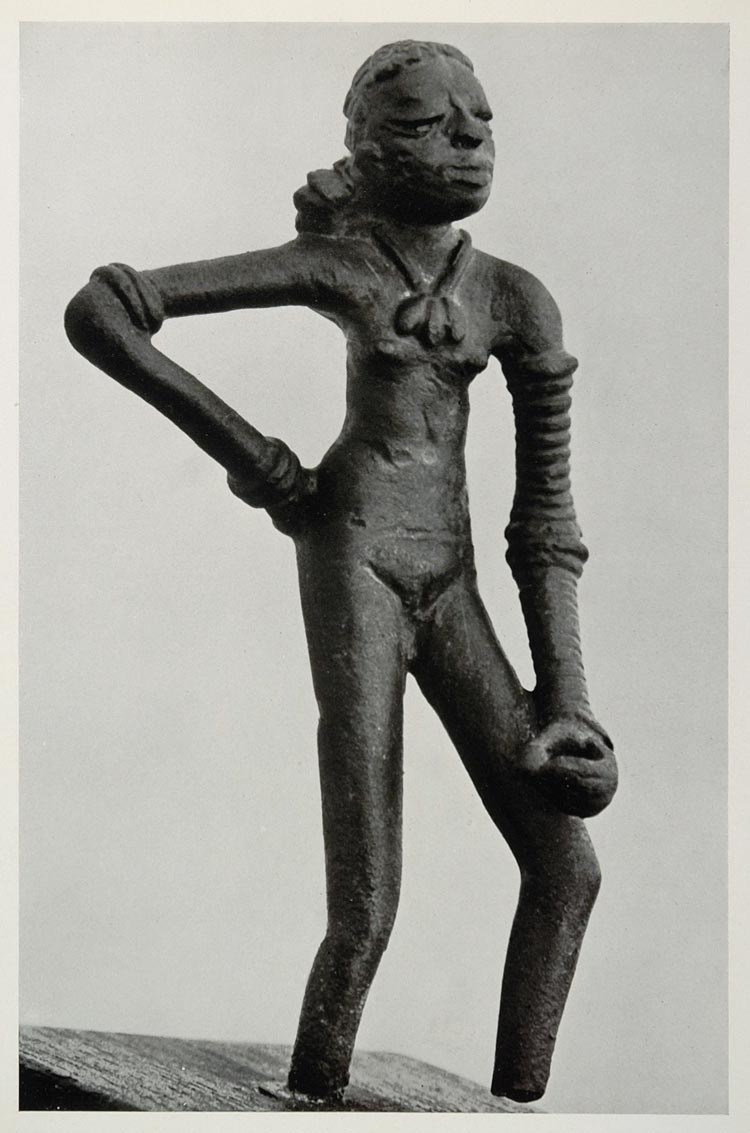
The Indus Valley civilization had captured my imagination even as a teenager when I had first set eyes on those two iconic pictures in my history textbook—that of the priest-king and the dancing girl. As I listened to my teacher describe it as one of the world’s oldest and most mysterious civilizations, my eyes as big as saucers, I was hooked. Mysterious, because archaeologists still could not decipher its script, nor tell how and why this great civilization had ceased to exist.

The Indus Valley continued to colour my imagination until I left school, and my home in Malaysia to further my education. But it was not before I was in my mid-thirties, and already a mother of three, that I had reason to revisit my fascination for the place. Interestingly, it came after a period of intense spiritual questioning, during which I had the idea of writing a novel tracing the roots of my culture. The question I asked myself was, how much could Hinduism have been influenced by that now vanished, but once-glorious civilization?

Photo Credit: The Dancing Girl by Alfred Nawrath / Public Domain

It was only after my novel Disorientation and its characters had taken up permanent residence in my imagination that I actually visited Harappa and its sister city, Mohenjo Daro. I booked a customised package tour with a travel agency in Pakistan. My journey started in Islamabad, from whence I flew to Lahore. I intended to traverse the country from top to bottom, stopping on the way at Harappa and Mohenjo Daro, and several other smaller places like Multan and Sukkur. From Lahore to Karachi I travelled by car, with a wonderful tour guide, who generously pointed out to me the beauty and history associated with the various places we passed. Some part of the way, we even traversed the ancient Silk Road that once ran from China to Europe. We saw beautiful mosques, palaces, gardens, museums, and even a carpet factory, but I admit the trip really began to get interesting for me when we approached one of the archaeological sites.

In Harappa and Mohenjo Daro, no longer having to rely only on my imagination, I witnessed for myself the brilliance of the ancient Harappan town planners and administrators. The way their streets and buildings were aligned in a grid pattern protecting residents from strong winds, and fortifying their acropolis to contain and preserve their important buildings—that was architecture!

Photo Credit: Mound F, Harappa by Uma Rajasingam

Some houses were double-storeyed, with courtyards and staircases and rooftop terraces. All inhabitants enjoyed common conveniences such as bathing tanks and community halls.

Photo Credit: Great Bath, Mohenjo Daro by Uma Rajasingam

The cities had common and private bathing wells, sophisticated drainage, and toilets; in the Mohenjo Daro acropolis, even a complex that might have housed some sort of monastery or a university. An archaeological museum on the Harappa site showcased the jewellery, pots, games, seals, and toys unearthed during various excavations. I marvelled at everything.

After visiting Harappa, and on the way to Mohenjo Daro, we made an overnight stop at Multan. The ancient city is thought to have been a halfway rest stop for traders travelling between Harappa and Mohenjo Daro. Estimated to be over five thousand years old, Multan is also a ‘living city’, a city that has been continuously occupied over the millennia, built and rebuilt by successive generations as its roads and houses fell into disrepair. But historians believe that much treasure of archaeological value may still lie hidden beneath Multan’s upper layers. This city was never abandoned like the others when the Indus Valley Civilization disintegrated, and continued to be occupied by successive rising cultures.

Photo Credit: Modern Bazaar, Multan by Uma Rajasingam

Since it is a living city, no excavations can be carried out in Multan without destroying existing houses and buildings. But the architecture and layout of a city may be just as useful in gauging its history as good, old-fashioned archaeology. To get an idea as to what a typical Indus Valley city would have looked like, my guide took me to the oldest part of Multan—the bazaar. When I saw it, I had to agree, it looked very much like what any marketplace or city centre of the Harappan civilization would have looked like during its mature phase; a large main street lined with buildings, wide enough to accommodate at least two lanes of passing carts or other vehicles, stalls overflowing with merchandise lining the walls, and numerous alleyways leading, in grid-like fashion, off the main street into residential dwelling areas, where people could leave or enter their homes safe from the danger of passing vehicles. Which was the case here, in the bazaar in Multan.

I had the good fortune to look into one of the homes off the main street after my guide obtained permission from a boy who lived there.

I saw a layout that resembled the standard Harappan layout—a few rooms grouped around a courtyard with a well, and a small flight of stairs leading to an upper storey room and then onto a flat rooftop-terrace. Even the front door was a humbler version of the polished Harappan door I had seen the previous day in the archaeological museum. A tiny opening above the door constituted a window, with a lamp niche beside it. It seemed to me little had changed down the millennia as far as building designs went. The area was a faded version of the grand city that would have been Harappa, missing its ingenious sanitation system, straight roads, and edifices with perfect right angles. Although the brilliant town-planning that characterized the Harappan era seemed to have suffered during the intervening centuries, I nonetheless, found it a rare privilege to glimpse the vibrant and colourful place that Harappa must have once been.

Photo Credit: Harappan Door, Archaeological Museum by Uma Rajasingam

The trip, on the whole, moved me not only because of the marvellous sights and the excavations, but also because of the feeling of magical timelessness the region inspired in me. While various invaders and visitors had entered the subcontinent over the millennia, some indelibly leaving their hallmark upon South Asian culture, mostly their presence had been quietly but firmly engulfed by the land. I had the feeling that if ever one of my descendants happened to visit this place at a time far away in the future, he or she would find the same things unchanged. And like me, perhaps be touched by an inexplicable affinity, a sense of ‘coming home’ to this hauntingly beautiful place.

V J Singam was born in Malaysia and spent a career in teaching and counselling before writing her first historical fantasy novel, Disorientation, in the historical fantasy trilogy, The Seer’s Return. In her books, V. J. relies on her love of ancient history and psychology to spin an epic tale of two kingdoms torn apart by deceit and treachery. V. J. is currently working on the second novel in the series, Lucidity, which continues with the saga of Dr Visvanathan on his mind-blowing journey. It will be out next year.


bottom of page